Ask a coastal family what ‘success’ looks like, and you won’t hear them talk about carbon credits. They’ll tell you about full fishing nets, safe homes, food security, and the dignity of earning a reliable income.
Yet, blue carbon success is still largely measured in terms of tonnes of CO₂. When we only count carbon, we overlook what truly drives lasting impact: cultural resilience, strong local leadership, and financial inclusion. This narrow view limits what projects can achieve and slows the growth of the sector.
“People worry that computers will get too smart and take over the world, but the real problem is that they’re too stupid and they’ve already taken over the world.”
Projects that begin by attending to local priorities – such as food security, diversified livelihoods, and inclusive and accountable governance – consistently deliver stronger ecological and financial results. Why? Because when communities see their own goals reflected in a project, they buy in. As co‑owners, rather than passive beneficiaries, they defend and sustain the work as their own. That sense of ownership helps projects withstand shocks, attract follow‑on investment, and endure over time.
That is why we advocate for projects built on community‑defined outcomes, not just credit projections. This begins with involving communities from the very start: co-designing project activities rather than consulting them as an afterthought. Engagement must be continuous, not a one‑off exercise, with transparent and open agreements on how benefits will be shared. Communities should also hold formal roles in governance and decision‑making. Finally, revenue streams need to extend beyond carbon, such as sustainable fisheries, honey production, seaweed farming, shellfish cultivation, or eco-tourism, so that local people can share in the benefits for the long term.
It’s also time to challenge how we talk about this work. Blue carbon is often reduced to the shorthand of ‘saving mangroves’. But that framing misses the point.
The real story is about the people who live alongside these ecosystems: the fishers, farmers, and local organizations ready to steward them for generations, if given the chance. For many coastal communities, this work is about survival, protecting culture, and securing the right to shape their own futures, as well as climate action.
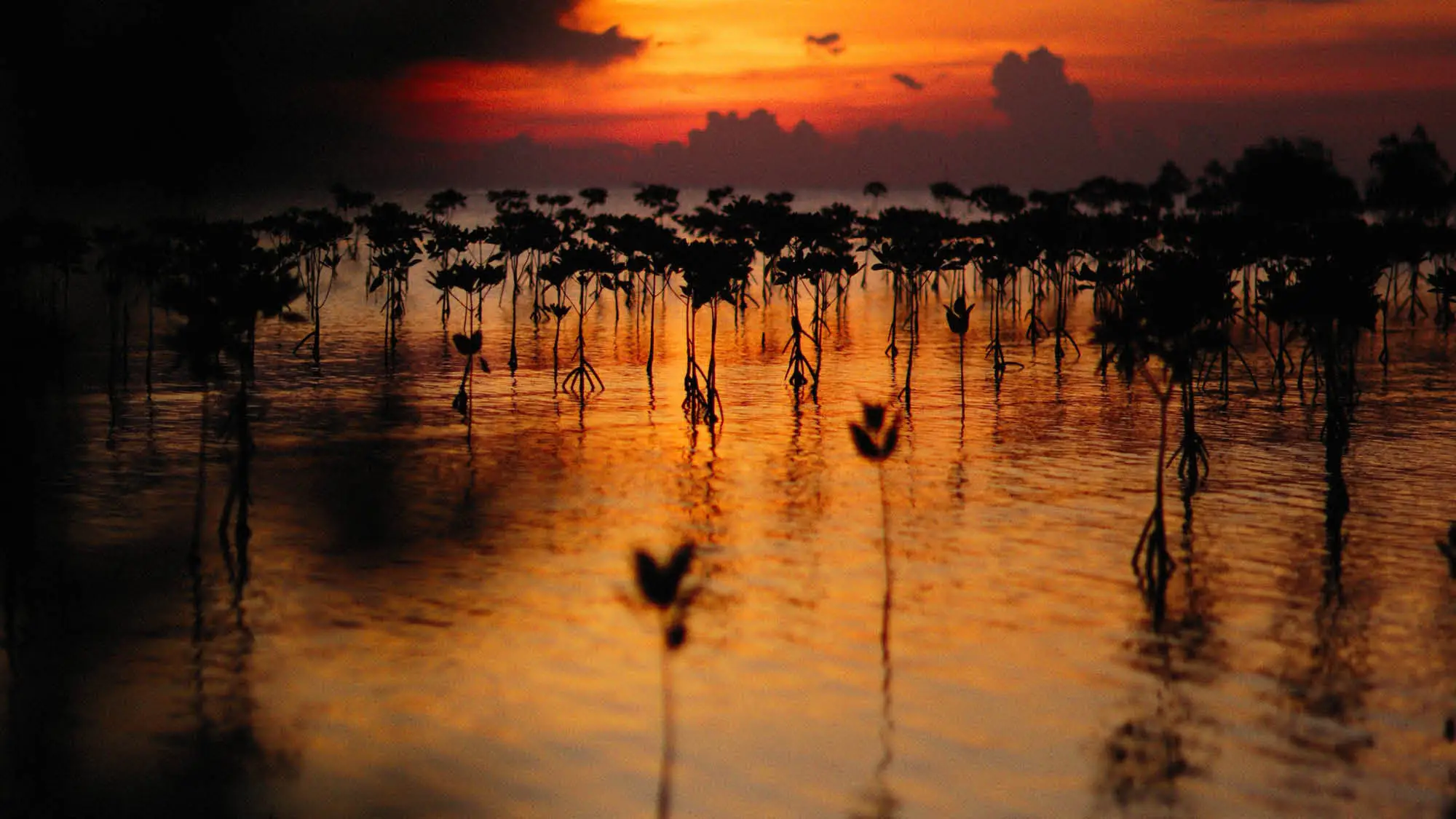
Mangroves are living seawalls that protect homes and farmland from storms and erosion. They sustain fisheries that feed millions and underpin eco‑tourism that brings in vital income. But none of this happens automatically. It happens when communities are supported to lead – when they are shareholders, not bystanders, in restoration.
If a project can calculate every tonne of CO₂ it has stored but can’t tell you how it has improved lives on the ground, can it really claim to be high‑integrity? The voluntary carbon market must go beyond emissions reductions. It’s time to build one that funds justice, equity, and resilience..
At Fair Carbon, we’re working to make this shift a reality through the Blue Carbon Academy, which democratizes access to the knowledge with tools needed to design high-integrity projects, and our tailored Service Packages, which help even small, community-led initiatives connect to carbon markets on fair terms. But we can’t do this alone.
Coastal habitats will only thrive if the people who live among them do. Now we want to go further. We’re inviting researchers, practitioners, and funders to join us in defining and adopting a standard set of social impact indicators for blue carbon, measuring what truly matters: livelihoods, gender equity, governance, and more. Share the metrics you already track and join us in setting a new benchmark for social integrity in blue carbon. The real measure of success in blue carbon is thriving communities.